en español
José Seves
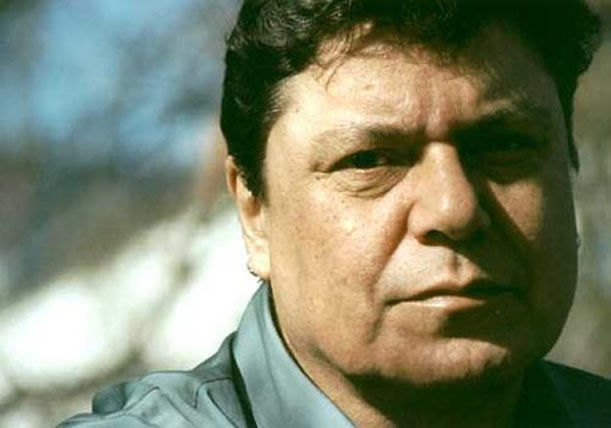

José Seves is blessed with one of the best voices in the history of Chilean music. And although most of his history is linked to Inti-Illimani (his voice is associated with classics such as “Vuelvo”, “Samba Landó”, and “Medianoche”), the singer is also a composer and has had a solo career both before and after his time with Inti, first as a radio singer and folkloric performer in the duo Anita and José and then following his temporary retirement from the band in 1998, as a singer-songwriter and folklorist. Today he is a member of the historical faction of Inti-Illimani, while at the same time continuing his independent creative work.
José and Anita: The first songs
His beginnings as a musician were as an adolescent on the radio program “Young People Sing with Lota Schwagger” on Radio Corporación. Every Sunday, this program broadcast live with young musicians presenting a variety of covers and songs of their own, on a tiny musical stage onto which Seves climbed as a folk singer in 1966. His friendship with the guitarist Orlando Salinas, the program’s musical director, led to Seves’ first recording the following year.
Salinas had written the lyrics for the song “Porque te quiero,” for which they both wrote music and recorded it as a single. The song did not attract much attention until the year 1968, when a group from San Carlos called Los Ángeles Negros brought it to the public’s attention via a local radio contest and converted into a hit at the national level. By then Seves was a student on the campus of the Universidad Técnica del Estado in Valdivia and was an active organizer of the University’s peña (folk club) that began to function in 1969, inspired by the Peña de los Parra founded in Santiago in 1965 by the children of Violeta Parra. It was here that Seves formed the duo Anita and José with Anita Pradenas, with whom he performed Latin American folk songs.
Visits to the Peña in Valdivia by the group Inti-Illimani opened up new opportunities for the duo. The band took them to Santiago to record a disc on the DICAP label, Anita and José, released in 1970. Classical Latin American songs such as “Alma llanera” and “El gavilán” from Venezuela and “Humahuaqueño” from Argentina-Bolivia, in addition to the use of instruments such as the charango and the cuatro, put them on the same wavelength with Inti, who invited them on their tour through Ecuador that same year. Shortly afterward, after several tours by Anita and José through the Valdivia region, the natural thing happened: Seves was invited definitively to join Inti-Illimani to record the disc Autores chilenos, the group’s second LP.
Seves performed continuously as a member of Inti-Illimani for almost 30 years. He lived the group’s exile in Italy and became one of its musical pillars due to his powerful voice, for his work as the composer of songs like “Samba Landó”, “Canto de las estrellas”, and “Polo doliente”, and his abilities to play multiple instruments, including the Peruvian cajón and the Mexican guitarrón, among many others. The sounds and the songs of Inti-Illimani owe a great deal to the contributions of José Seves.
Seves ended his relationship with Inti-Illimani in 1998. His reluctance to continue the exhausting pace of touring led him to abandon the group a year after the departure of another of its other longtime members, Max Berrú. A solo career was the natural outcome of that decision, supplemented and supported by the teaching role he had adopted following his return to Chile in 1989.
“Hata, Songs of the Village” was his debut CD as a soloist. The record featured a dozen songs by Italian songwriters that Seves translated in collaboration with Elizabeth Morris, his musical accomplice in subsequent years, as well as an original song composed in conjunction with Horacio Salinas. The record was conceived as a way of bringing to Chile the musical experience he had gained during his 17 year residence in Italy.
José and Elizabeth: The contemporary compositions
A year later, in 2000, Seves returned to Italy to record the disc Conosci Víctor Jara?, recorded in conjunction with the Naples musician Daniele Sepe, based on the songs by the Chilean songwriter who was assassinated in 1973. He made live presentations in Chile and in 2002 released his second record, Canto remolino, in which highlighted his songwriting abilities. The record features Latin American rhythms including the tango and lyrics that unveil his nostalgia for Chile during exile and the re-encounter with his homeland upon his return. A version of Patricio Manns’ “Valdivia en la niebla” complements this recording, which did not receive the radio airplay it deserved and whose production was directed by Elizabeth Morris.
That same year José Seves rejoined Inti-Illimani. He stayed for two more years before quitting again in order to band together with Horacio Salinas and Horacio Durán to form Inti-Illimani Histórico. He currently remains in the group, having recorded the disc Esencial which includes his song “Cantantes invisibles” that had appeared previously on his solo record Canto remolino. José’s voice remains intact and no end appears to be in sight for his creative work.
—Jorge Leiva. Translated from Música popular chilena: La enciclopedia de la música chilena en Internet.
Learn more about José Seves and his music and learn more about Inti-Illimani Histórico.
Listen to José Seves sing "Song of the Stars", his homage to Víctor Jara.