DAILY ASSIGNMENTS
Part I: Introduction to "What Is Religion?"
Day 1, Wednesday, January 11: What are we going to study? Some preliminary notions.
Leuba’s 48 definitions of religion (from his Psychological Study of Religion, pp. 339-361) are available here. It is not expected that you will read all of these definitions before class! Rather, the instructor will refer to the list and comment on a few of the definitions during the first class. It will thus be helpful if students will bring laptops or tablets to class, for easy access to the document.
For discussion in class, from Jonathan Z. Smith, “Religion, Religions, Religious,” in Mark C. Taylor, ed., Critical Terms for Religious Studies, pp. 269-284, 281-282:
"It was once a tactic of students of religion to cite the appendix of James H. Leuba's Psychological Study of Religion (1912), which lists more than fifty definitions of religion, to demonstrate that 'the effort clearly to define religion in short compass is a hopeless task' (King 1954). Not at all! The moral of Leuba is not that religion cannot be defined, but that it can be defined, with greater or lesser success, more than fifty ways. Besides, Leuba goes on to classify and evaluate his list of definitions. 'Religion' is not a native term; it is a term created by scholars for their intellectual purposes and therefore is theirs to define. It is a second-order generic concept that plays the same role in establishing a disciplinary horizon that a concept such as 'language' plays in linguistics or 'culture' plays in anthropology. There can be no disciplined study of religion without such a horizon."
Day 2, Wednesday, January 18: What is religion and why study it?
Please note: Readings preceded by an asterisk (*) are eligible for a response. Fourteen responses are required for the semester as a whole. Responses are to be submitted on T-Learn.
- Reading: James C. Livingston, “What is Religion?” Anatomy of the Sacred: An Introduction to Religion, Chapter 1 pp. 3-14. [For this chapter only, click here for a pdf of the relevant pages. Due to the pdf being made from the 4rth edition, the page numbering is slightly different: pp. 3-16.] For information on our author, click here.
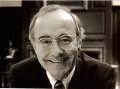
James C. Livingston (1930? - 2011)
- Reading: from the AAR website: “What Is Religion?” http://studyreligion.org/what/index.html
- Reading: from the AAR website, “Why Study Religion?” http://studyreligion.org/why/index.html
- *Reading: Frederick Streng, “Introduction: What Is 'Religion'?” Ways of Being Religious: Readings for a New Approach to Religion, pp. 1-5.
Day 3, Monday, January 23: What are some of the major elements of religious life and major ways of being religious?
- *Reading: Ninian Smart, “The Nature of a Religion and the Nature of Secular Worldviews,” (9 pages) from The World’s Religions: Old Traditions and Modern Transformations.
- *Reading: Frederick Streng, "Introduction: What Is 'Religion'?" Ways of Being Religious: Readings for a New Approach to Religion, pp. 6-18 (up to "Practical Considerations Governing This Study").
To go to the next section of the course, click here.